
Rack and Stack Services
Installed to your elevation and proven before we leave
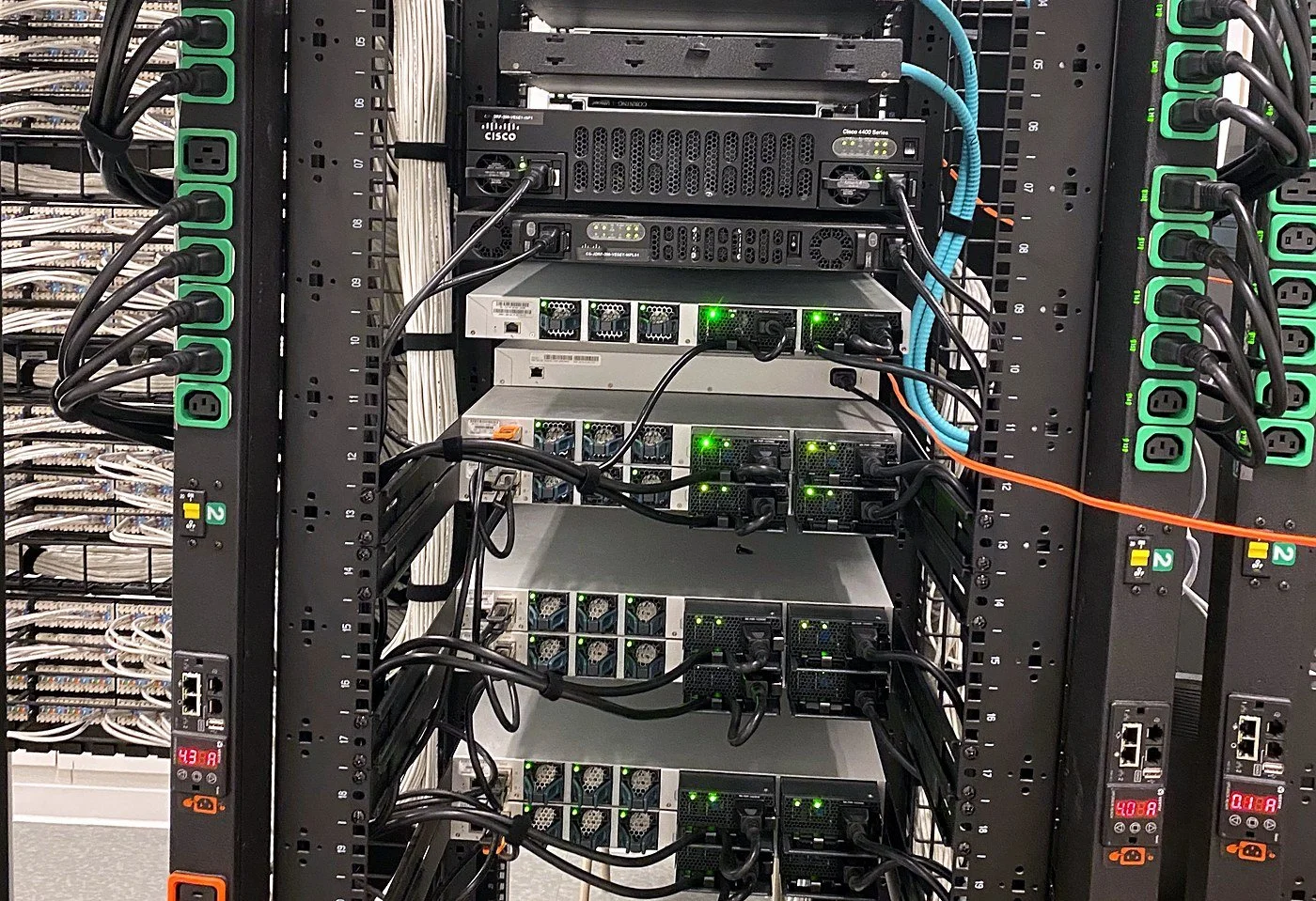
Core-1 racks, cables and powers up servers, switches, firewalls and storage in data centers, colocation cages and network rooms across NYC, New Jersey and Philadelphia. You send the elevation and the port map. We install to it, prove power and connectivity before we leave, and send back photos of every rack we touched.
What we install
Servers from Dell and HPE. Switches and routers from Cisco, Juniper, Arista and Brocade. Firewalls from Palo Alto Networks and Fortinet. Storage and backup arrays from NetApp, EMC and Rubrik. One unit dropped into an existing rack, or full cabinets built out from empty rails for a new deployment or a migration cutover.
How the job runs
Gear is received at the dock and checked against the packing list before anything gets unboxed, so a missing rail kit or the wrong power supply shows up on day one and not at the rack. Rails go in at the RU positions on your elevation. If a rail doesn't fit the cabinet depth, we stop and call you before we improvise.
Each device is mounted, cable managed and powered from the A and B feeds you specified, and we check that the two power supplies land on different PDUs. We've found clustered gear with both supplies on the same side of the power, which means one tripped breaker takes the whole node down. It takes a minute to check and it's worth it.
Then the cabling. Copper and fiber get patched per your port map, and management ports (iLO, iDRAC, console) are connected and live so your engineer can reach the box remotely. Every cable is labeled at both ends. Packaging gets broken down and cleared out of the cage before we sign out.
What we need before dispatch
A rack elevation with RU positions, a port map or cabling plan, the power plan (which PDU, which outlets, A and B), tracking numbers or a delivery date for the gear, and the badge authorizer at the facility. No elevation yet? We can build one from a site survey before install day. Our one-page service request template covers all of it.
What you get back
Front and rear photos of every rack we worked in, an updated rack elevation, the port map as built, serial numbers for every device installed, and notes on anything we found that wasn't on the plan. Your asset team or your auditor can use that package as is.
Coverage and scheduling
Rack and stack work runs across the NYC, New Jersey and Philadelphia corridor, including the Secaucus, Carteret, Newark and Edison data center markets and the Manhattan carrier hotels. We schedule around your maintenance windows, nights and weekends included, and travel for project work outside the region. For one-off tasks after the install, see our smart hands and remote hands service. For the cabling side of a build, see data center structured cabling and fiber.
Frequently asked questions
What is rack and stack?
Physically installing IT equipment in a rack: mounting rails, racking the device, connecting power and network cabling, labeling, and confirming the device powers up and can be reached. Basic setup like a management IP can be added to the scope. Full configuration usually stays with your engineers.
Do you bring tools and hardware?
We bring hand tools, cage nuts and screws, hook-and-loop ties, a label printer and a cable tester. Rails, power cords, optics and patch cables usually ship with the order or come from your spares. Tell us at scoping if you want us to supply cables.
How long does an install take?
It depends on the size of the gear, how much cabling each device gets, and the facility's access rules. You get a schedule in the written scope once we've seen the elevation and port map.
Can your tech work while our engineer is on a call?
Yes. A lot of installs run that way, cutovers especially. Your engineer confirms each step on a phone or video bridge while our tech works the rack.
Do you remove old equipment too?
Yes. Old gear comes out the same way new gear goes in, with labels, photos and an updated elevation when we're done. See our data center decommissioning service.
How is rack and stack priced?
Hourly, or a fixed price for the scope once we've reviewed the elevation and port map. Either way the price is in writing before anyone is dispatched.